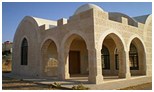
 , Lined up stones mark the burial place of one of the ‘Blessed Ten’, to whom Prophet Mohammad promised paradise. He took part in all major battles and campaigns of Islam; including Badr, Uhud (in Medina), Al-Khandaq (the Trench), the Conquest of Mecca, and Hunayn. He was the signatory on behalf of the Muslims at the Treaty of Hudaybiyah (west of Mecca), a compromise that was reached between Prophet Mohammad and Meccan leaders,in which
Mecca gave political and religious recognition to the growing community of Muslims.
At the conquest of Jerusalem, he was one of the Muslim signatories. Abdul-Rahman was a successful businessman who shared his wealth. On one day he managed to free 31 slaves, another time he gave a caravan of 700 camels loaded with food to charity and upon his death he made a charitable will of 1000 horses and 50,000 dinars.
 at the village of Bilal, in Wadi Essair another suburb of Amman. Whilst still a slave Bilal embraced Islam, which brought upon him the wrath of his master Umayyah ibn Khalaf who tried to coerce him into rejecting his faith by placing a huge rock on his chest during the peak summer heat of Mecca. He fought bravely in the Battles of Badr and Uhud, where he was able to avenge himself from his former master. Gifted with a beautiful voice Bilal became the Prophet
Kerak Shrines (Tombs of the martyrs of Mutah Battle)
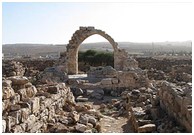
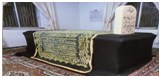 (Arabic: زيد بن حارثة) or Zayd mawla Muhammad (c. 588-629 CE), Was a prominent figure in the early Islamic community and the only one of sahaba whose name appears in the Qur’an (33:37).He was the adopted son of the prophet (sallallahu `alayhi wa sallam). He was the 01st leader who killed during the battle.
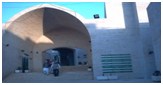 (Arabic: جعفر ابن أبي طالب) (Died 629), also known as Ja‘far at-Tayyār, was the son of Abu Talib ibn ‘Abdul Muttalib (the uncle of prophet (sallallahu `alayhi wa sallam)), and the elder brother of the fourth Islam caliph, Ali ibn Abi Talib. Jafar was raised by his uncle, Abbas ibn ‘Abdul Muttalib, for his father was a poor man and had to support a big family. He embraced Islam in around 613. He appointed Zayd ibn Harithah as commander of the army and he was subsequently killed during the battle.
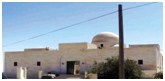 (Arabic: عبدالله ابن رواحة) was one of the companions of the prophet (sallallahu `alayhi wa sallam), He was one of the twelve representatives of the Ansar who took an oath of allegiance initially, before the Hijra and later spread Islam to Medina. Also he was among the 73 that pledged allegiance to the prophet (sallallahu `alayhi wa sallam) in Medina; Abd Allah ibn Rawahah was third in command during the Battle of Mu’tah and was subsequently killed during the battle.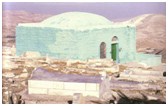
Other shrines of significance to Islam are located in Kerak city. You can visit Prophet Nuh ‘Noah’ shrine, Allah sent Noah to his people to warn them of divine punishment if they continued to worship idols. As stated in the Holy Qur’an in a Sura entitled Noah (Sura 71, verses 1-3): “We sent Noah to his People (with the Command): Do thou warn thy People before there comes to them a grievous Chastisement. He said: O my People! I am to you a Warner, clear and open: That ye should worship Allah, fear Him and obey me”.
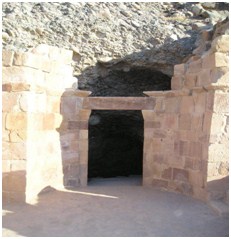
The Prophet Lut lived at the same time as the Prophet Ibrahim and was sent as a Messenger to a neighboring tribe to the Prophet Ibrahim That tribe, according to the Qur’an, practiced a perversion never before seen in the world: homosexuality. When the Prophet Lut told the people to abandon one of the greatest sins and delivered to them the message of Allah, they rejected him. They denied that he was a Prophet and continued with their horrid lifestyle. As a result of this, the tribe was destroyed in a terrible disaster by Allah. And Lut, when he said to his people, “Do you commit an obscenity not perpetrated before you by anyone in all the worlds? You come with lust to men instead of women. You are indeed a depraved people.” (Qur’an, 7:80-81) We rained down a rain upon them. See the final fate of the evildoers! (Qur’an, 7:84) [Our Messengers said to Lut,] “We will bring down on the inhabitants of this city a devastating punishment from heaven because of their deviance.” We have left a Clear Sign of them behind for people who use their intellect. (Qur’an, 29:34-35)This city, in which the Prophet Lut lived
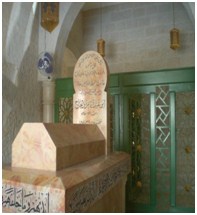 Arabic: أبو عبيدة عامر بن عبدالله بن الجراح), more commonly known as Abu Ubaidah ibn al-Jarrah, was one of the ten companions of Prophet Muhammad(pbuh) who were promised Paradise . He remained commander of a large section of Muslim armies during the time of Caliph Umar ibn al-Khattab and was on the list of Umar’s appointed successors to the Caliphate. Abu Ubaydah was one of the first persons to accept Islam. He became a Muslim one day after Abu Bakr. Who was the man whose right hand the Prophet (PBUH) held and said, `In every nation there exists a man worthy of all trust and the trustworthy of this nation is Abu `Ubaidah lbn Al- Jarraah.” Who was the man whom the Prophet sent with reinforcements to `Amr Ibn Al-‘Aas in the Dhaat As-Salaasil Expedition and made commander of the army that included `Umar and Abu Bakr? Who was this Companion who was the first to be called the Commander of the Commanders? Who was that tall, slim man with gaunt face? Who was that strong, trustworthy man about whom `Umar lbn Al Khattaab said on his deathbed, “If Abu `Ubaidah Ibn Al-Jarraah were alive, I would have entrusted him with the caliphate, and if
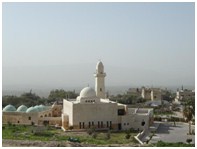 Arabic: معاذ بن جبل), Was a young boy when Mohammad started preaching the message of Islam. He was a native of Medina and was there during most of Mohammad’s lifetime. He was noted for his intelligence, quick wit, potency in speech, and for his prominent standing between people. He was also described as a very attractive looking individual with dark eyes and eyelashes. His teeth were extremely white and he had an afro. Books referring to his physical appearance say that the onlooker would be stunned by his good looks; He became a Muslim at the hands of Musab bin Umair, Wherever Muath went, people would refer to him for legal judgments on matters over which they differed. This is not strange since he was brought up in the school of the Prophet himself and learnt as much as he could from him. He was the best pupil of the
 The venerable companion Shurahbil ibn Hasanah was among the early Muslims who fled to Abyssinia. He was reputed for his strong faith, intelligence, bravery and successful administration. Shurahbil actively participated in the Battle of Yarmouk and the conquest of Jerusalem. When the Caliph Abu Bakr Al-Siddiq sent the Muslim armies to Greater Syria, Shurahbil was in command of the army assigned to the conquest of Jordan. Later, the Caliph Omar ibn Al-Khattab appointed Shurahbil the governor of a province in Greater Syria, where he distinguished himself for his fair dealings with subordinates. He died from the plague on the same day as the venerable companion Abu Ubeida Amer ibn Al-Jarrah.
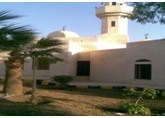 The venerable companion Amir ibn Abi Waqqas was the maternal cousin of the Prophet and the 11th man to convert to Islam. He was devoted to his faith, although his mother Himnah, daughter of Abi Sufyan ibn Harb ibn Umayyah, swore to stay out in the burning sun until he renounces Islam. He migrated to Abyssinia and fought in the Battle of Uhud and was later entrusted with carrying messages from the commanders of the Muslim army to the Caliph in Medina. Furthermore, he was the deputy of the venerable companion Abu Ubeida in his governorship of the military district of Syria. You can visit his tomb located inside a new building erected on vaults, within the village of Waqqas in the northern Jordan valley.
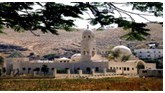 The venerable companion Derar ibn Al-Azwar was a poet and a fierce warrior who loved combat. He fought in the wars of Apostasy and took part in the conquest of Greater Syria along with his distinguished sister Khawlah bint Al-Azwar. In the town of Deir Alla a mosque superimposed by a dome houses the tomb of Dirar ibn Al-Azwar. The 18th year after Hijra was when he, too, became a victim of the Great Plague.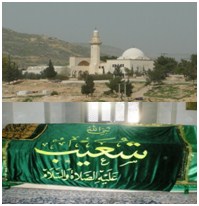
Shuʿayb, or Shoaib, (Arabic: شعيب; meaning who shows the right path), believed that he was sent as a prophet to two communities, namely the Midianites and the People of the Wood, He is mentioned in the Qur’an a total of 11 times. He is believed to have lived after Abraham, Shoaib proclaimed the faith of Islam and warned the people to end their fraudulent ways. When they did not repent, God destroyed both the communities, Shoaib is understood to have been one of the few Arabian prophets mentioned by name in the Qur’an, the others being Saleh, HUD, Ishmael and Mohammad . It is said that he was known by early Muslims as “the eloquent preacher amongst the prophets”, because he was granted talent and eloquence in his language, his tomb lies in Salt.
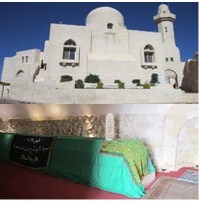
He was the second prophet of the Bani-Isra’il, within a mosque to the west of Salt, on a hill carrying his name lies the shrine of Prophet Yusha ‘Joshua’. He was the apprentice of Prophet Moses and later his successor. Prophet Joshua led the army of the tribes of Israel in conquest over the land of Palestine. South-west of Salt in an area known as Khirbet Ayyoub foundations of an ancient building mark the final resting place of Prophet Ayyoub ‘Job’ who is mentioned in the Holy Qur’an 4 times. His legendary patience and faith gave him strength to endure tremendous hardships. Ultimately Prophet Job was rewarded with blessings, as stated in the Holy Qur’an (Sura 21, verses 83-84): “And (remember) Ayyoub, when He cried to his Lord, ‘Truly distress has seized me, but Thou art the Most Merciful of those that are merciful’. So we listened to him: We removed the distress that was on him, and we restored his people to him, and doubled their number, as a Grace from Ourselves, and a thing for commemoration, for all who serve us”.
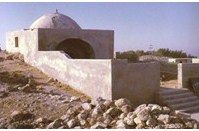
The prophet HUD was an ancient Arab prophet, descended from the prophet Noah. Allah sent him to his tribe Aad, who were known for their strength and size, and said to live in the Yemen, to warn them to worship one God, but they ridiculed him and accused him of madness. Eventually, Allah sent them a terrible drought as a warning, and when they did not heed that, he sent a black cloud with a terrible wind that for eight days and seven nights chastised them and eventually destroyed them all, with the exception of HUD and the faithful with him who escaped. The eleventh chapter in the Qor’an was named after him. His shrine is located near Jerash.
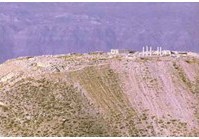
Prophet yahya (John the Baptist) was the son of the prophet Zechariah and thus also the cousin of the blessed Virgin Mary. His birth itself was miraculous because his parents were too old to have children at the time, but were granted one in response to his father’s prayers to Allah to grant him a son that would carry on his work (of preaching). Yahya was a pious, ascetic son, and was inspired with the scripture and went about the land preaching the word of God, and foretelling the imminent advent of the Messiah. When consulted by King Herod Antipas as to the illicitness of the latter’s marriage, he refused to declare it legal, and was eventually murdered for this, at the instigation of Salome, in Herod’s citadel at Mukawir / Machaerus. Albeit his head was taken and buried in what is now the Umayyad mosque in Damascus, while his body remained and buried in Mukawir.
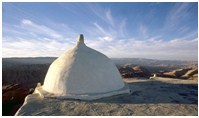
On top of Jabal Al-Nabi Harun near Petra is the shrine of Prophet Harun ‘Aaron’ the brother of Prophet Musa ‘Moses’ . Allah responded favorably to the supplication of Prophet Moses to make Aaron his minister. Prophet Moses left Aaron to act on his behalf when he went to interlocutor with Allah , near Mount Sinai, after he had promised his people to produce them a Torah as their constitution and legal document. Aaron predeceased Moses and his shrine’s topography corresponds exactly with the traditional Islamic and Biblical accounts of Aaron’s burial.
 a phrase that practicing Muslims often say after saying (or hearing) the name of one of Prophet Mohammad’s companions.